Insulation and energy savings
Heating and cooling account for the largest share of energy use in most American homes. Yet a surprising amount of that energy is simply wasted: warm air escapes in winter, hot air sneaks in during summer, and your HVAC system works overtime to compensate. Proper insulation is the single most cost-effective way to stop this waste, and understanding how it works can save you hundreds of dollars a year while making your home noticeably more comfortable.
This page brings together everything you need to know about insulation and energy savings, whether you’re a first-time homeowner or planning a renovation.
Why Insulation Matters for Your Energy Bills
Think of your home as a thermos. A well-insulated home keeps the temperature you’ve paid for inside, just like a thermos keeps coffee hot for hours. A poorly insulated home, on the other hand, is like a paper cup: heat leaks out quickly, and you keep refilling it.
According to the U.S. Environmental Protection Agency’s ENERGY STAR program, air sealing and insulation can save the average homeowner around 15% on heating and cooling costs. In older homes with minimal insulation, savings can be far greater. The U.S. Department of Energy estimates that proper insulation in attics, walls, and basements can reduce total energy bills by 10% to 20% or more.
Where Heat Escapes: The Key Areas to Insulate
Heat moves in predictable ways, always flowing from warm to cold spaces. Knowing where your home loses the most energy helps you prioritize your budget.
- Attic: The biggest culprit by far. Because heat rises, an under-insulated attic can account for up to 25% of a home’s heat loss.
- Walls: Exterior walls represent a large surface area. Older homes built before modern energy codes often have little or no wall insulation.
- Floors and crawl spaces: Uninsulated floors over unheated spaces feel cold underfoot and drive up heating costs.
- Basements: Basement walls and rim joists are common sources of drafts and heat loss.
- Windows and doors: Not strictly an insulation issue, but air leaks around frames can undo the benefits of good insulation if not sealed.
Consider a typical example: a family in a 1990s two-story house in the Midwest notices their heating bills climbing every winter. An energy audit reveals only six inches of attic insulation where twelve are recommended. Topping up the attic insulation costs a fraction of a new furnace and pays for itself within a few heating seasons.
Understanding R-Value: The Language of Insulation
When comparing insulation products, you’ll encounter the term R-value, which measures resistance to heat flow. The higher the R-value, the better the material insulates. What matters is the total R-value of the assembly, not just the material itself.
Recommended R-values depend on your climate zone. Homes in northern states like Minnesota need attic R-values of R-49 to R-60, while homes in southern climates like Florida can achieve comfort with R-30 to R-49. The Department of Energy publishes zone maps to help you determine the right target for your location.
Main Types of Insulation: Pros and Cons
Each insulation material suits different budgets, spaces, and DIY skill levels.
- Fiberglass batts: Affordable and widely available, ideal for open wall cavities, attics, and basements. Easy DIY option, but performance drops if compressed or poorly fitted.
- Blown-in cellulose or fiberglass: Perfect for attic floors and enclosed existing walls. Requires a blower machine, often rented free with bulk material purchases.
- Spray foam: Expands to fill gaps and provides an excellent air seal along with high R-value per inch. Best left to professionals due to cost and application complexity.
- Rigid foam boards: High insulating value in thin profiles, useful for basement walls, exterior sheathing, and around foundations.
- Mineral wool: Fire-resistant and sound-dampening, a good choice for those prioritizing safety and acoustic comfort.
Insulation Is Only Half the Story: Air Sealing
Insulation slows heat transfer, but it doesn’t stop airflow. Gaps around recessed lights, plumbing penetrations, attic hatches, and wiring holes let conditioned air escape like a leaky balloon. For best results, seal air leaks before adding insulation.
- Get a home energy audit, or perform a basic DIY assessment with a smoke pencil on a windy day.
- Seal gaps with caulk (for gaps under 1/4 inch) or expanding foam (for larger openings).
- Weatherstrip doors and attic hatches.
- Add insulation to reach your climate zone’s recommended R-value.
- Verify results with follow-up energy bills or a blower door test.
Cost, Savings, and Payback Period
Insulation projects range widely in cost. A DIY attic top-up with blown-in cellulose might cost a few hundred dollars, while a full professional spray foam retrofit can run into the thousands. The good news: payback periods for insulation are among the shortest of any home improvement, often just two to five years.
Financial incentives sweeten the deal. Federal tax credits under current energy efficiency programs, along with state and utility rebates, can cover a meaningful share of insulation costs. Check the ENERGY STAR rebate finder and your local utility’s website before starting a project.
Signs Your Home Needs Better Insulation
- Rooms that are noticeably colder or hotter than the rest of the house.
- High energy bills despite moderate thermostat settings.
- Drafts around windows, doors, or electrical outlets on exterior walls.
- Ice dams forming on the roof edge in winter.
- Attic insulation that sits below the level of the floor joists.
- Walls that feel cold to the touch in winter.
DIY or Hire a Professional?
Many insulation projects are beginner-friendly, but some situations call for a professional.
- DIY-friendly: Adding batts or blown-in insulation to an open attic, weatherstripping, caulking, and insulating exposed basement walls.
- Better with a pro: Blowing insulation into closed walls, spray foam installation, knob-and-tube wiring concerns, suspected asbestos around old insulation, and major air-sealing work requiring a blower door test.
When hiring a contractor, look for certification from the Building Performance Institute (BPI) or an ENERGY STAR partner, and always compare at least three written estimates.
Beyond Insulation: Complementary Energy-Saving Steps
Insulation delivers the biggest returns, but it works best as part of a whole-home approach. Pair your insulation project with a programmable or smart thermostat, ENERGY STAR-rated windows where replacements are planned, duct sealing, and regular HVAC maintenance. Together, these measures can cut household energy use substantially while extending the life of your heating and cooling equipment.
Start with an energy audit, prioritize the attic, seal the leaks, and insulate to your climate zone’s recommended level. Step by step, these improvements transform a leaky house into an efficient, comfortable home, and the savings show up on your utility bills for decades to come.
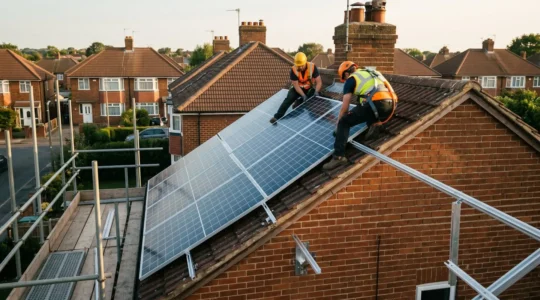
Install solar panels to harness renewable energy and reduce dependence on electricity
Picture a typical January morning in the Midlands: grey skies, heating running full throttle, and your electricity meter spinning relentlessly. Now imagine that same household generating 60–70% of its own power from roof-mounted photovoltaic panels, slashing grid dependence even during…
Read more
How can double-glazed windows enhance energy efficiency in your home?
Double-glazed windows have revolutionized home energy efficiency, offering a powerful solution to combat heat loss and reduce energy consumption. As homeowners increasingly prioritize sustainability and cost-saving measures, understanding the science behind these innovative windows becomes crucial. From the physics of…
Read more
What are the benefits of using thermal curtains to regulate indoor temperature?
Thermal curtains have emerged as a powerful tool in the quest for energy efficiency and comfort in modern homes. These specialized window treatments go beyond mere decoration, offering a scientifically-backed solution to temperature regulation challenges. By leveraging advanced materials and…
Read more
Why is improving attic insulation crucial for reducing energy costs?
Attic insulation plays a pivotal role in maintaining energy efficiency and reducing costs in residential properties. As energy prices continue to rise, homeowners are increasingly focusing on ways to optimize their home’s thermal performance. Properly insulating the attic space can…
Read more
The advantages of switching to LED light bulbs for cost savings and sustainability
Lighting technology has come a long way since the invention of the incandescent bulb. Today, LED (Light Emitting Diode) lighting stands at the forefront of energy-efficient illumination solutions. As concerns about energy consumption and environmental impact continue to grow, more…
Read more